30 resources
more than 100 beneficiaries
for the education of homeless people
30 open educational materials and resources for training homeless adults, as well as for supporting teachers and adult educators in training activities for homeless people.
Phase 1
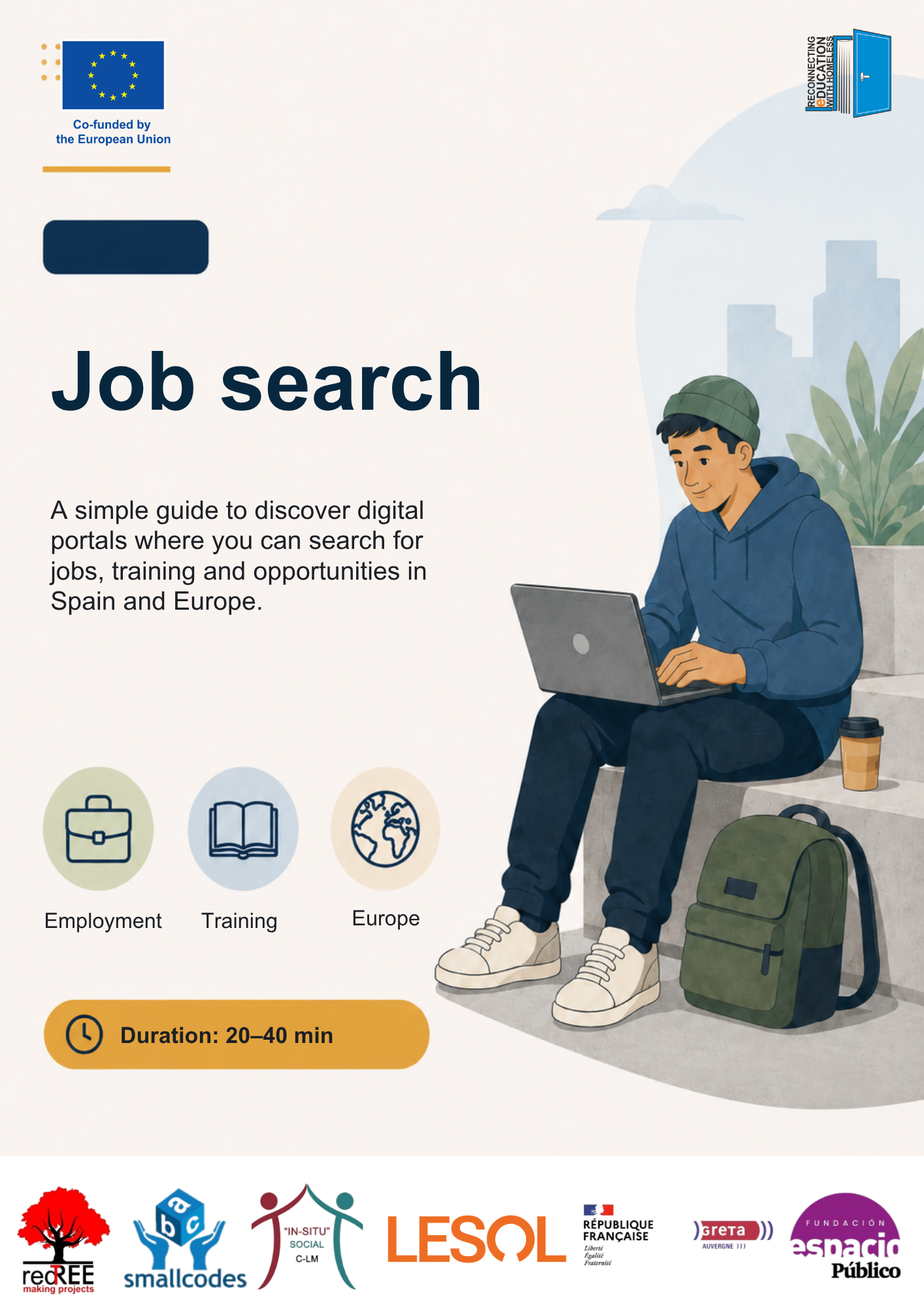
10 simple resources equivalent to the Initial 2 course corresponding to Initial Education (Literacy and New Readers) in basic adult education (EPA) or equivalent in other countries. Social workers and technicians from social entities will distribute these resources weekly to homeless adults according to the personalized itinerary established for each of them, with an explanation of how to use them in 20-40 minutes.
Each of these resources generates specific learning situations that participants must manage independently with occasional support from the street team. It is the participant who decides when they want to use the resource, which resource they want to use, and how much time they want to invest in it.
Resource 1. Digital tools for creating a cv
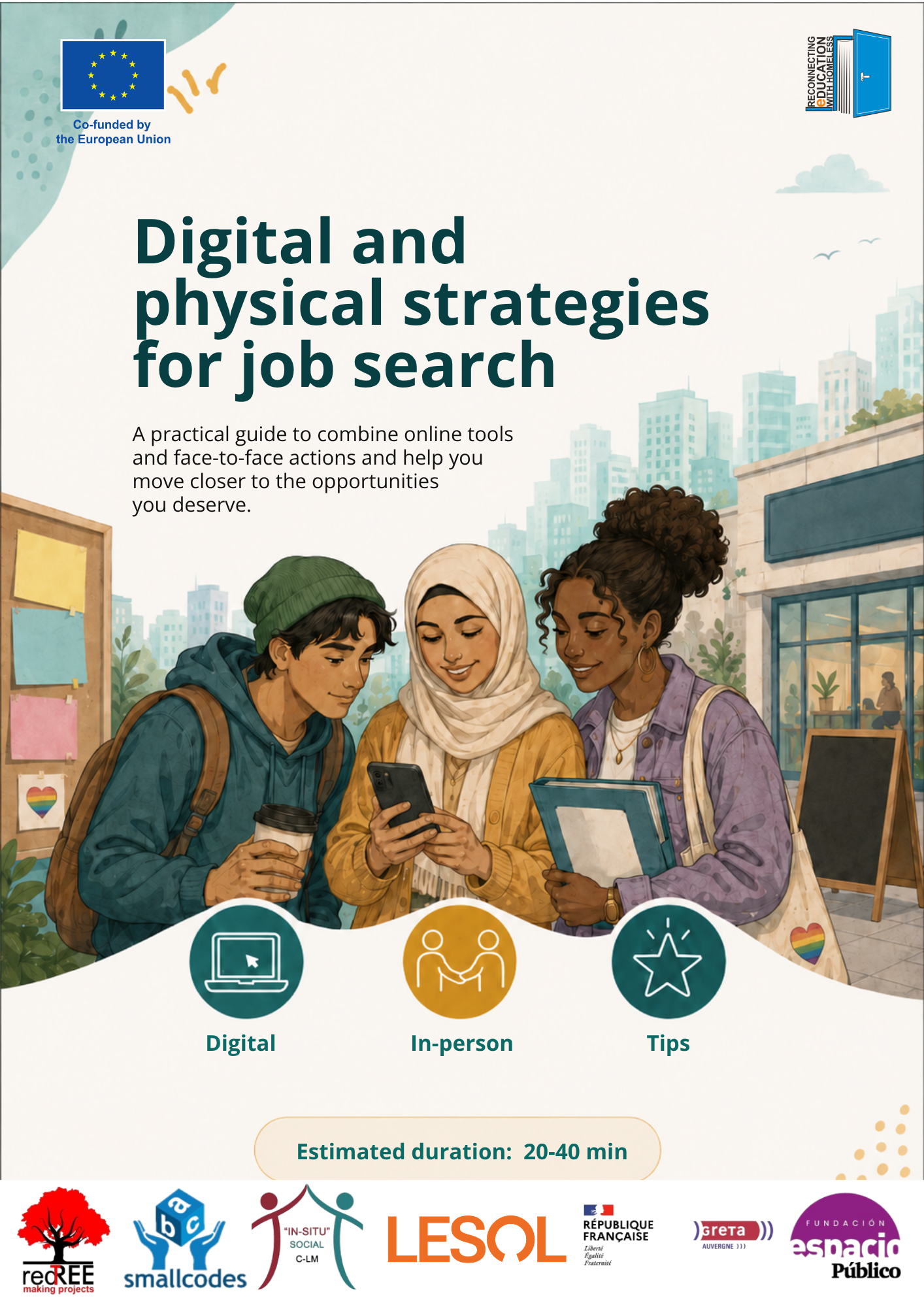
Resource 2. Digital and physical strategies for job hunting
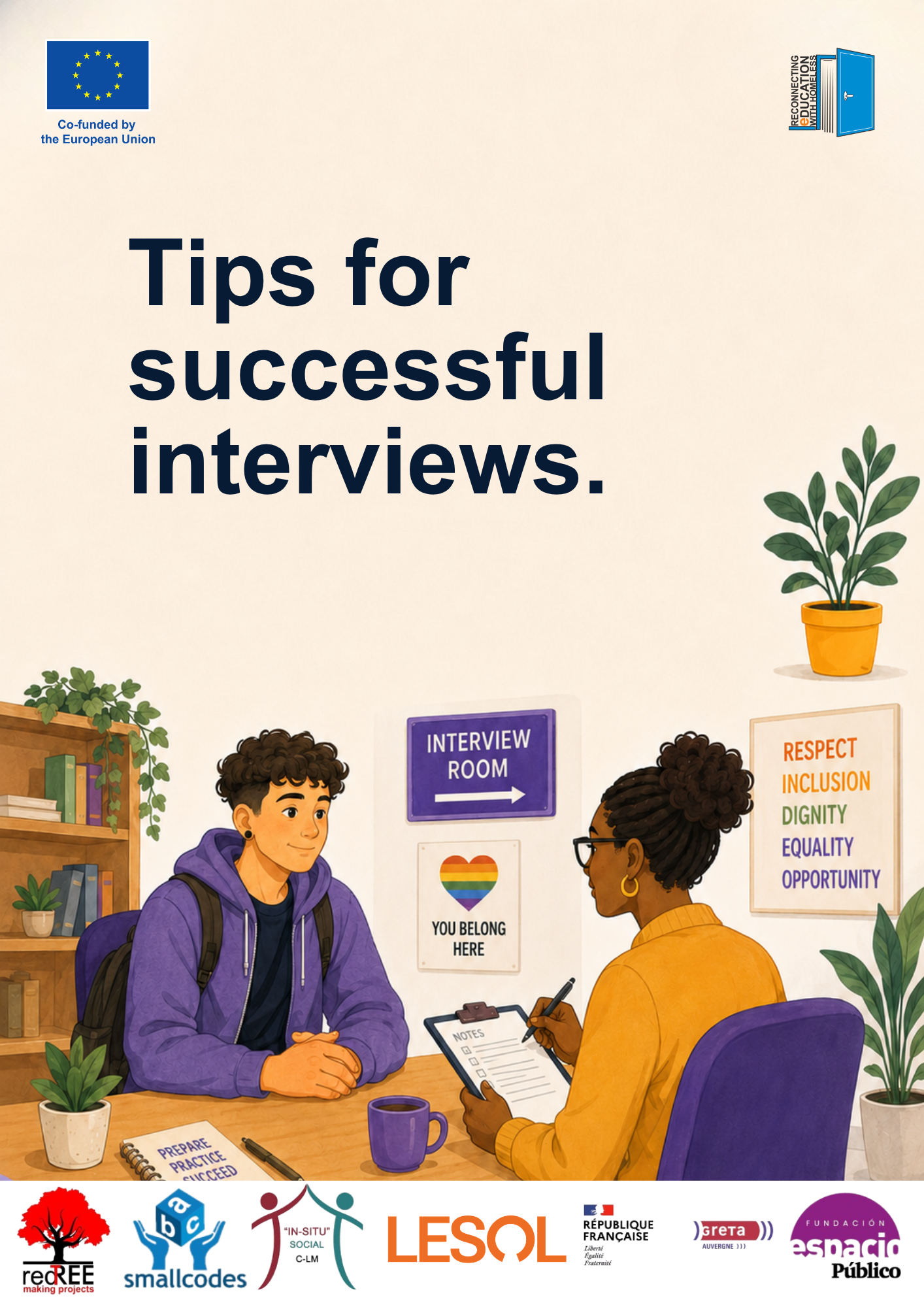
Resource 3. Tips for successfully handling interviews
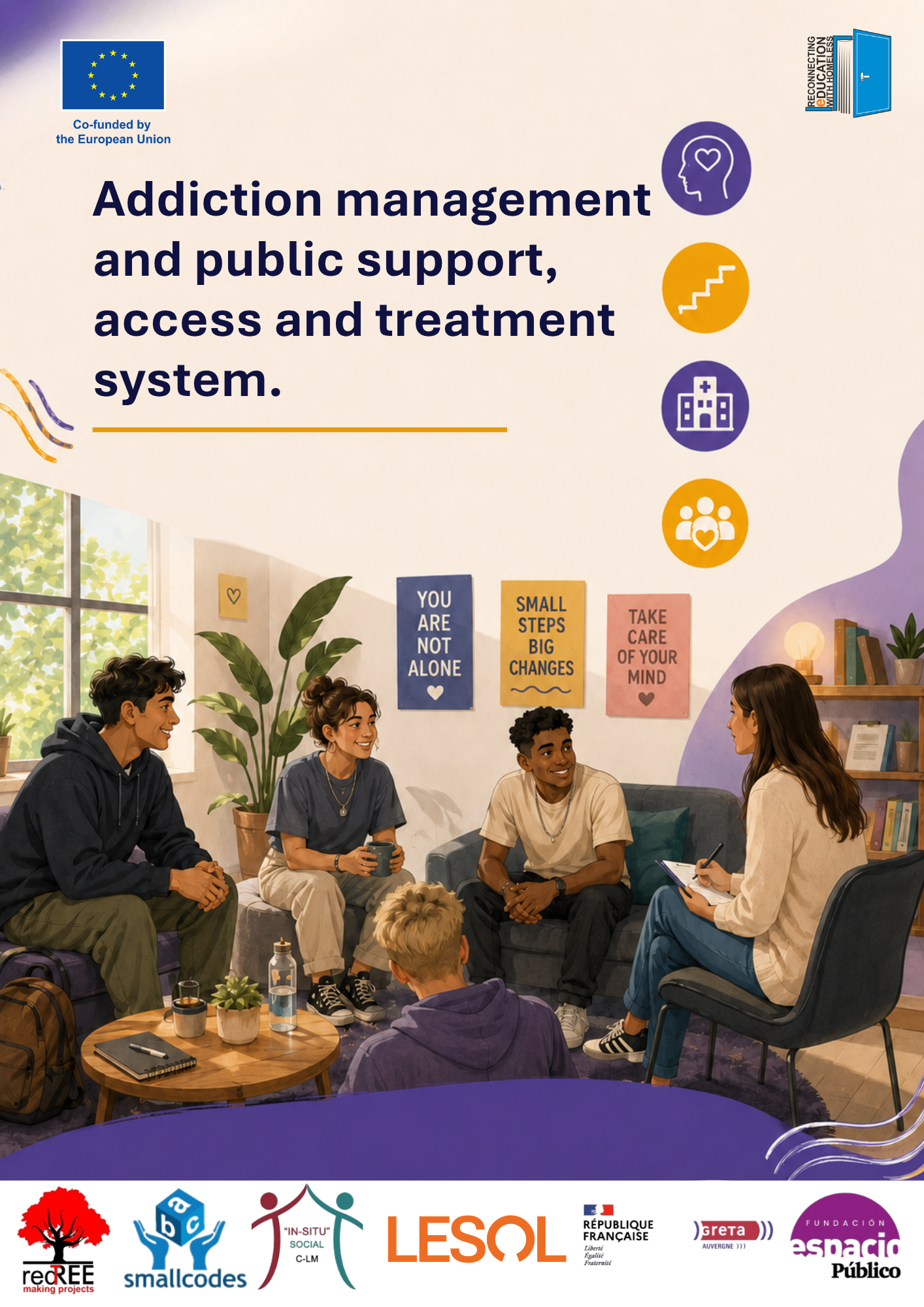
Resource 4. Addiction management
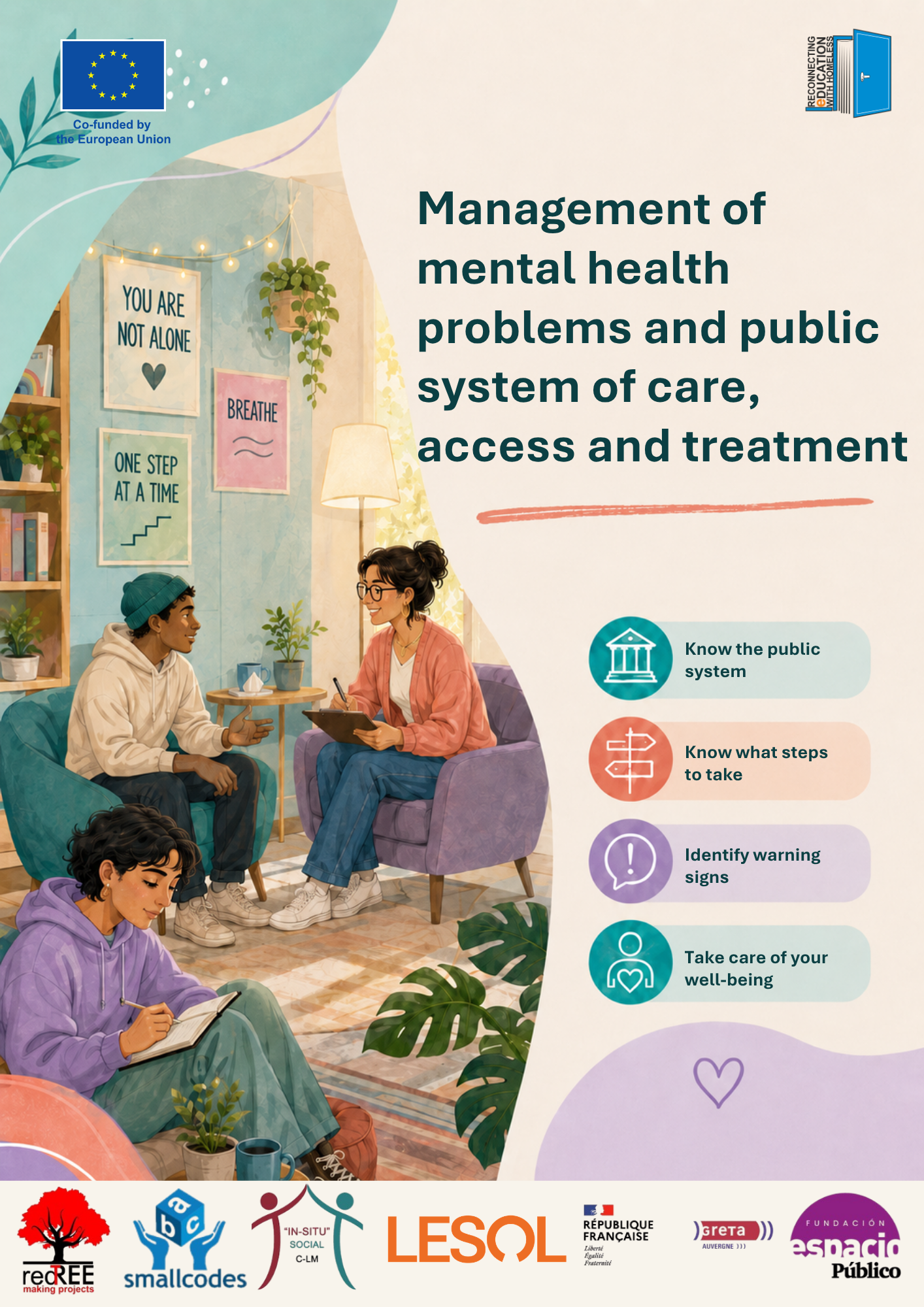
Resource 5. Managing mental health issues
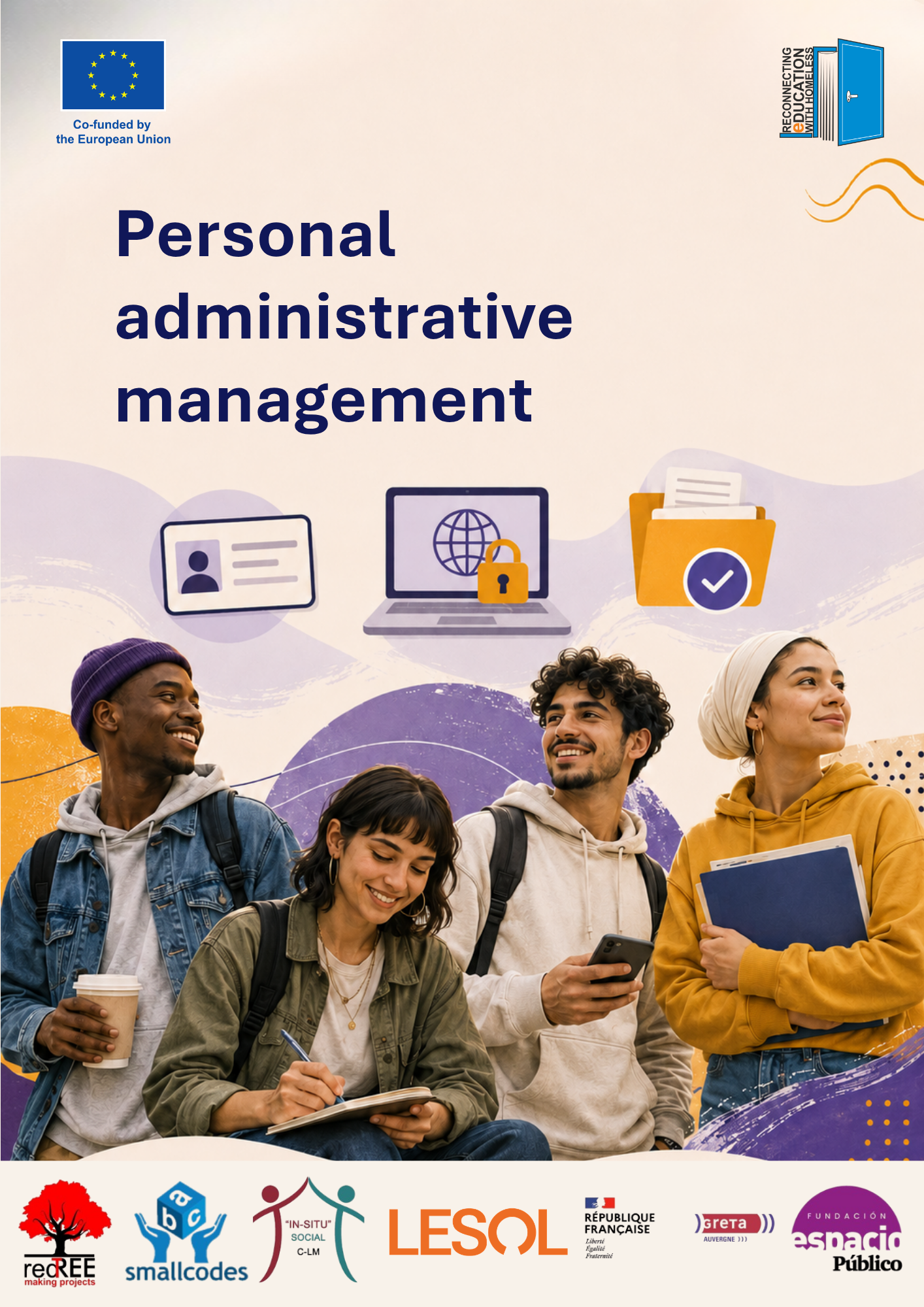
Resource 6. Personal administrative management
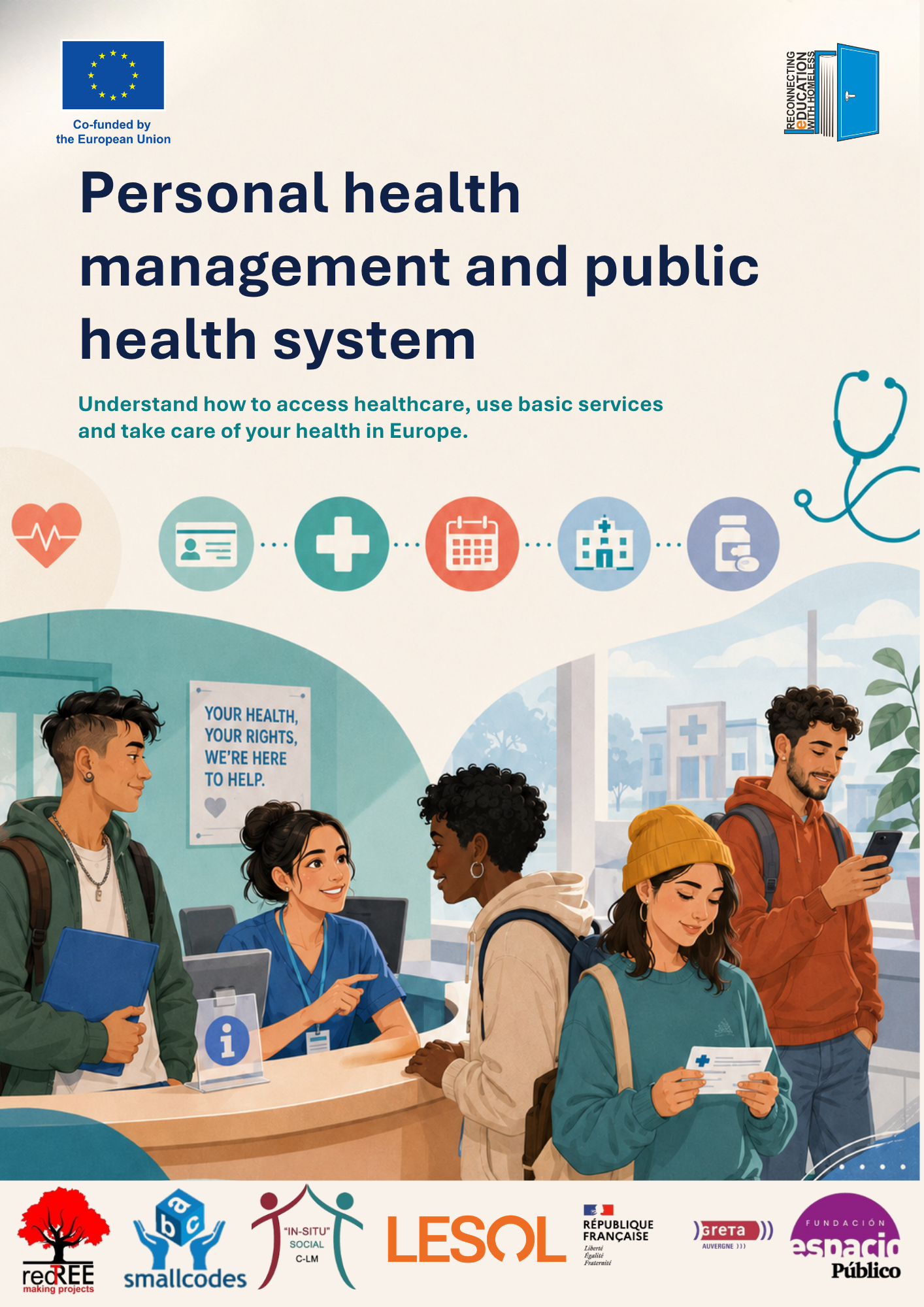
Resource 7. Personal health management and the public health system
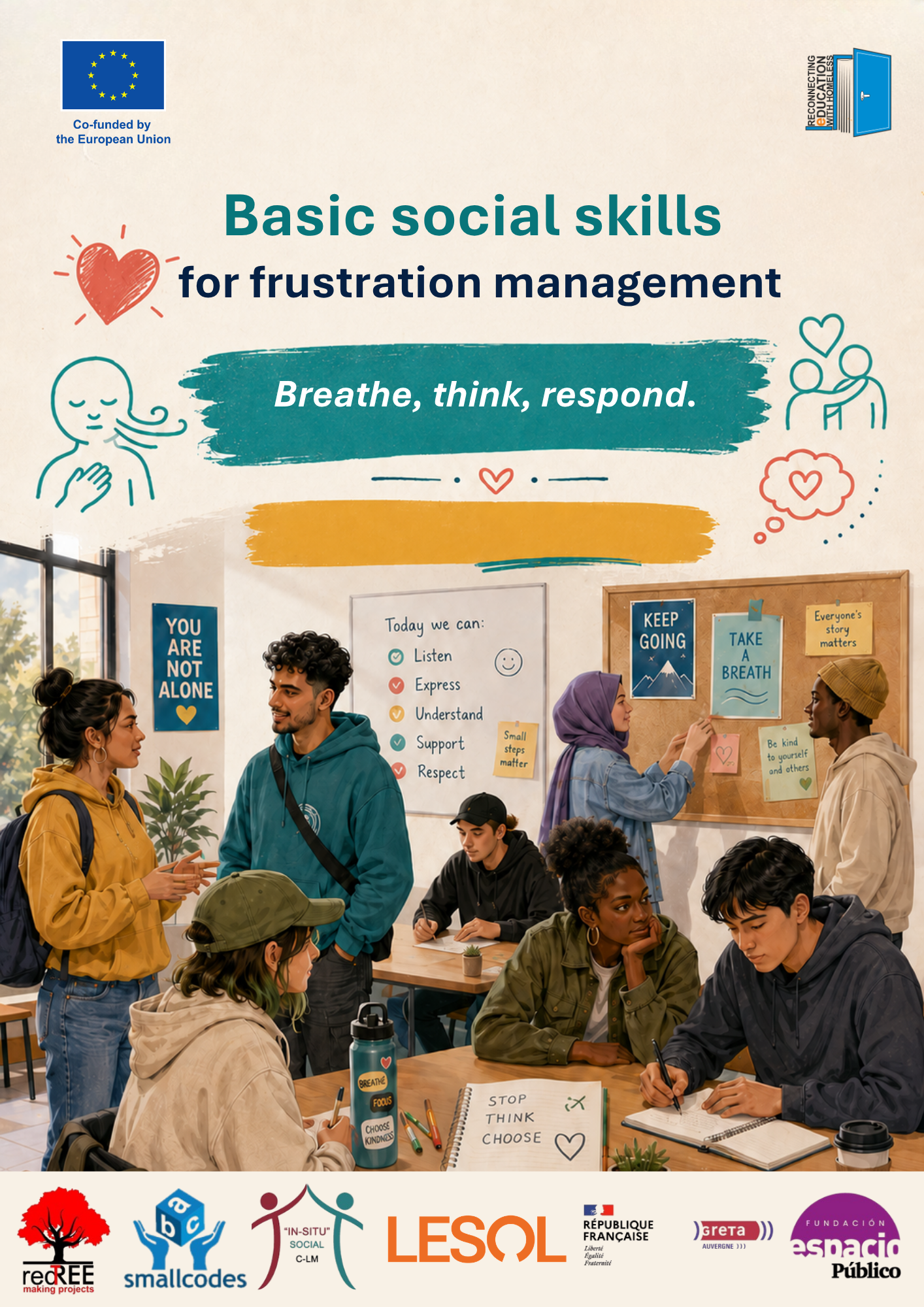
Resource 8. Basic social skills for managing frustration
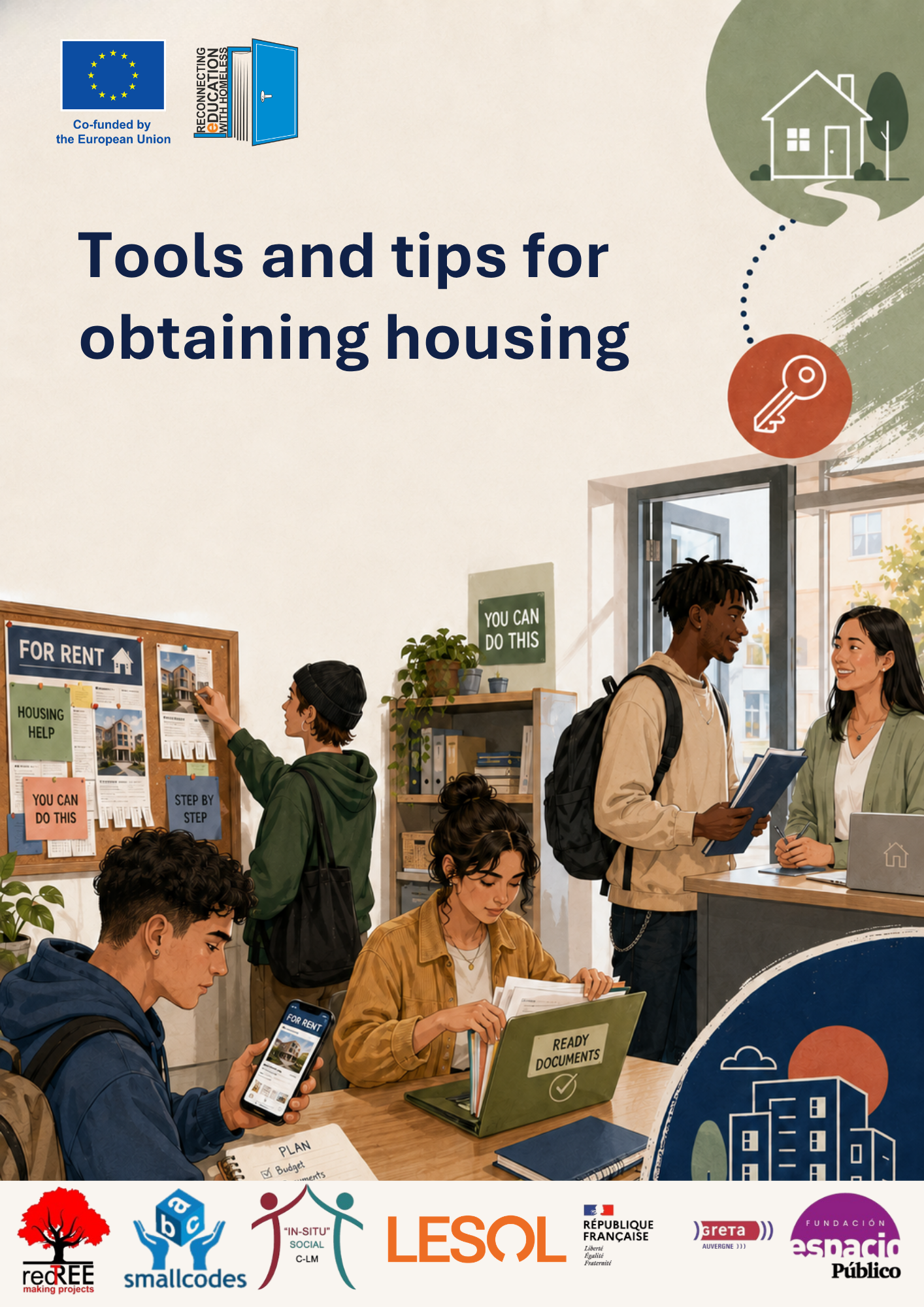
Resource 9. Tools and tips for finding housing or passing interviews
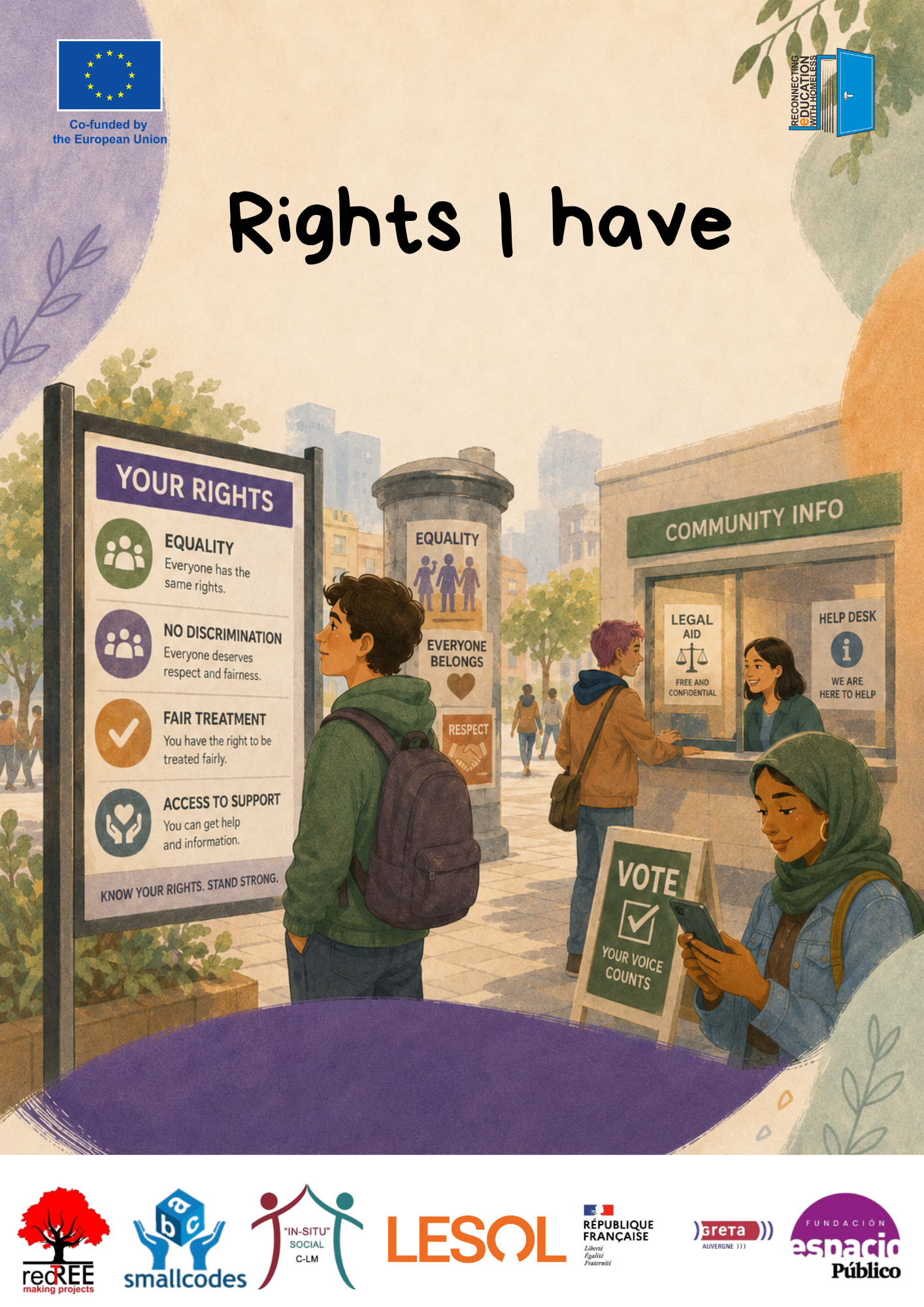
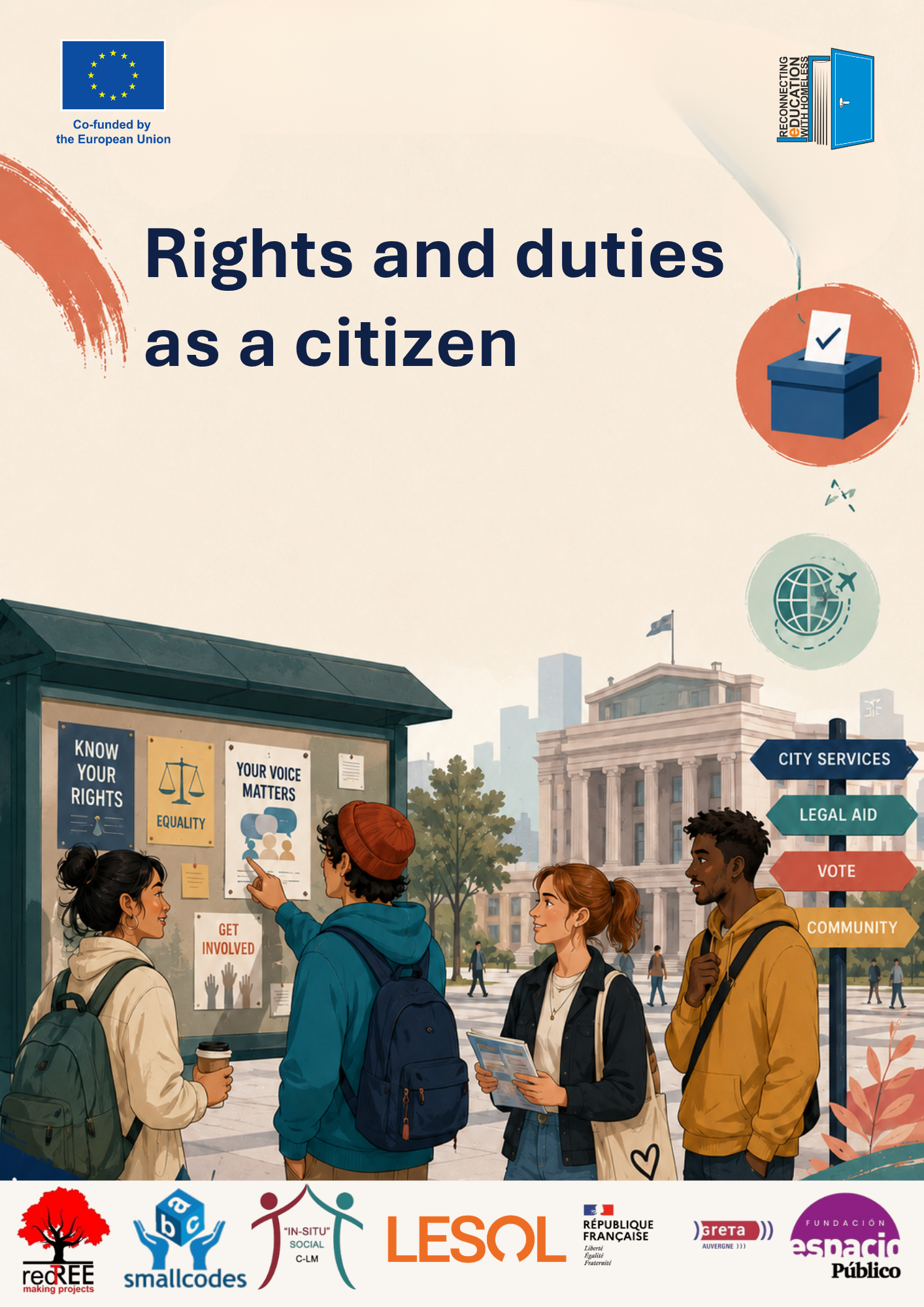
Resource 10. Rights and obligations as a citizen
Phase 2
10 resources with a more formal structure, equivalent to the Initial 2 course corresponding to Initial Education (Literacy and New Readers) in basic adult education (EPA) or equivalents in other countries.
If in PHASE 1 the street team (social workers and technicians) was basically responsible for providing resources and offering specific advice on any questions users might have in order to learn independently with the simple educational resources provided, in PHASE 2, trainers and teachers will join the street team to accompany homeless participants in order to create a bond and generate a more structured and effective learning process for key skills, cross-cutting skills, and basic knowledge, as well as to generate a climate of trust.
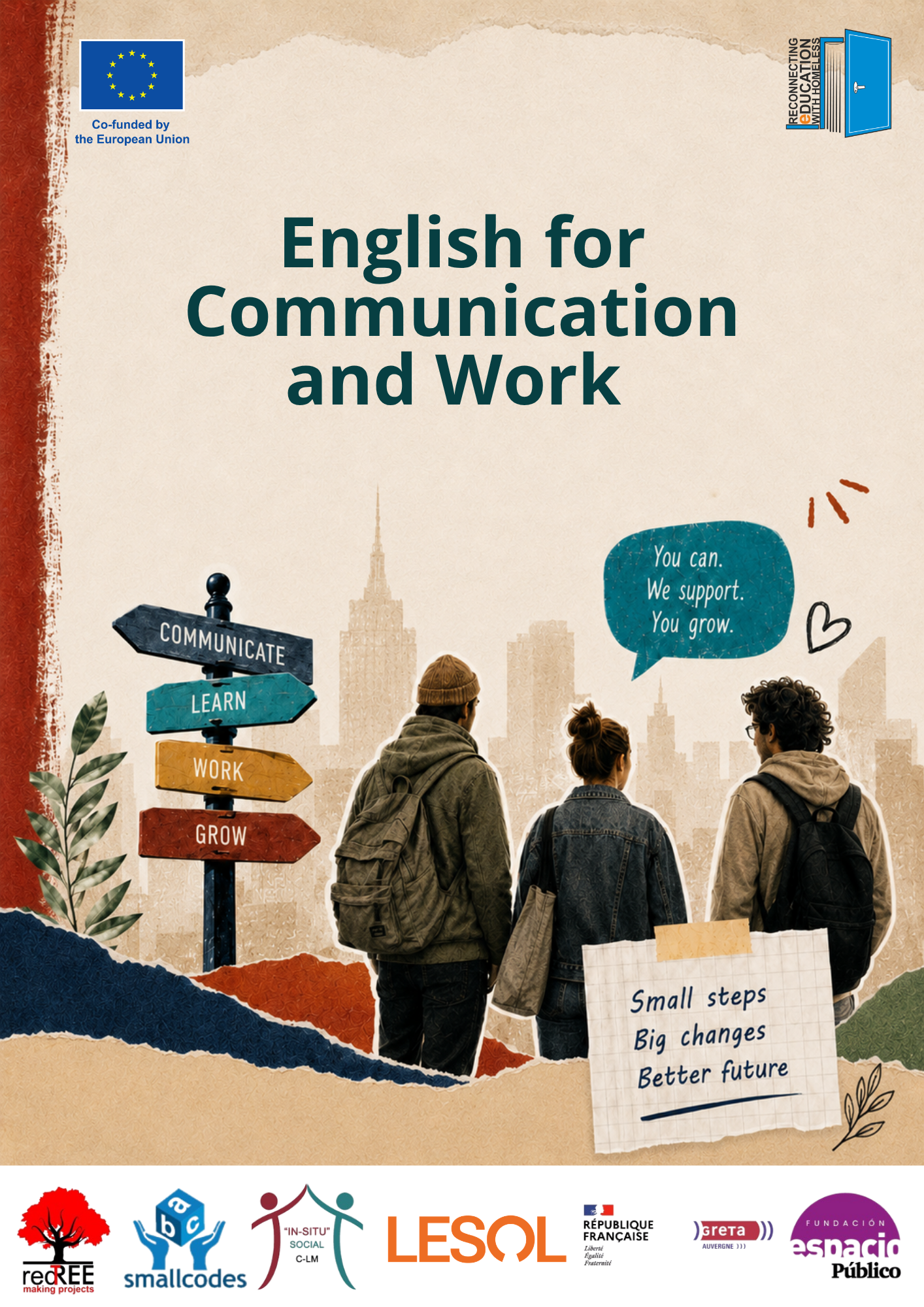
Resource 1. English for communication and work
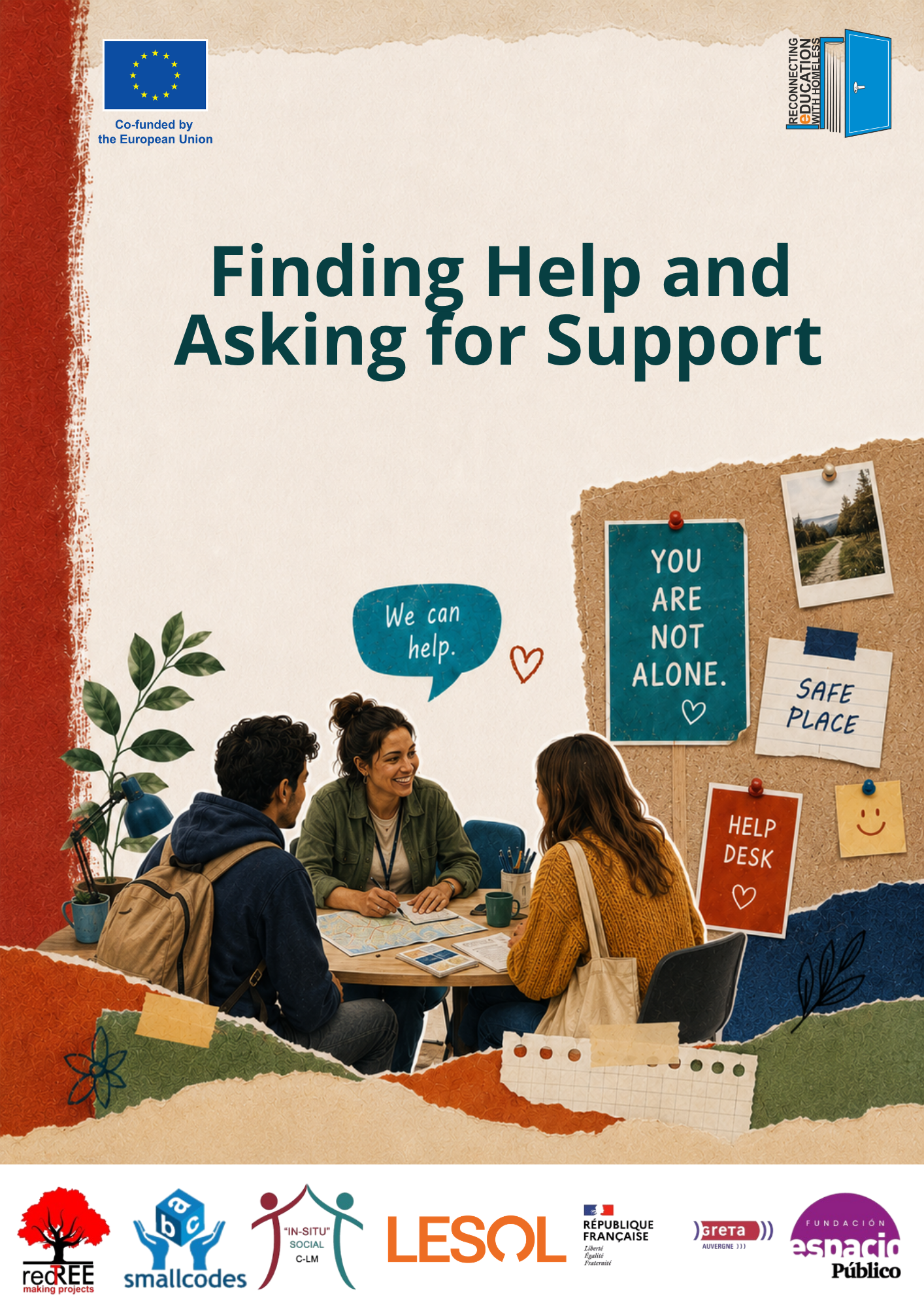
Resource 2. Finding help and asking for support
Resource 3. Building your resume with confidence
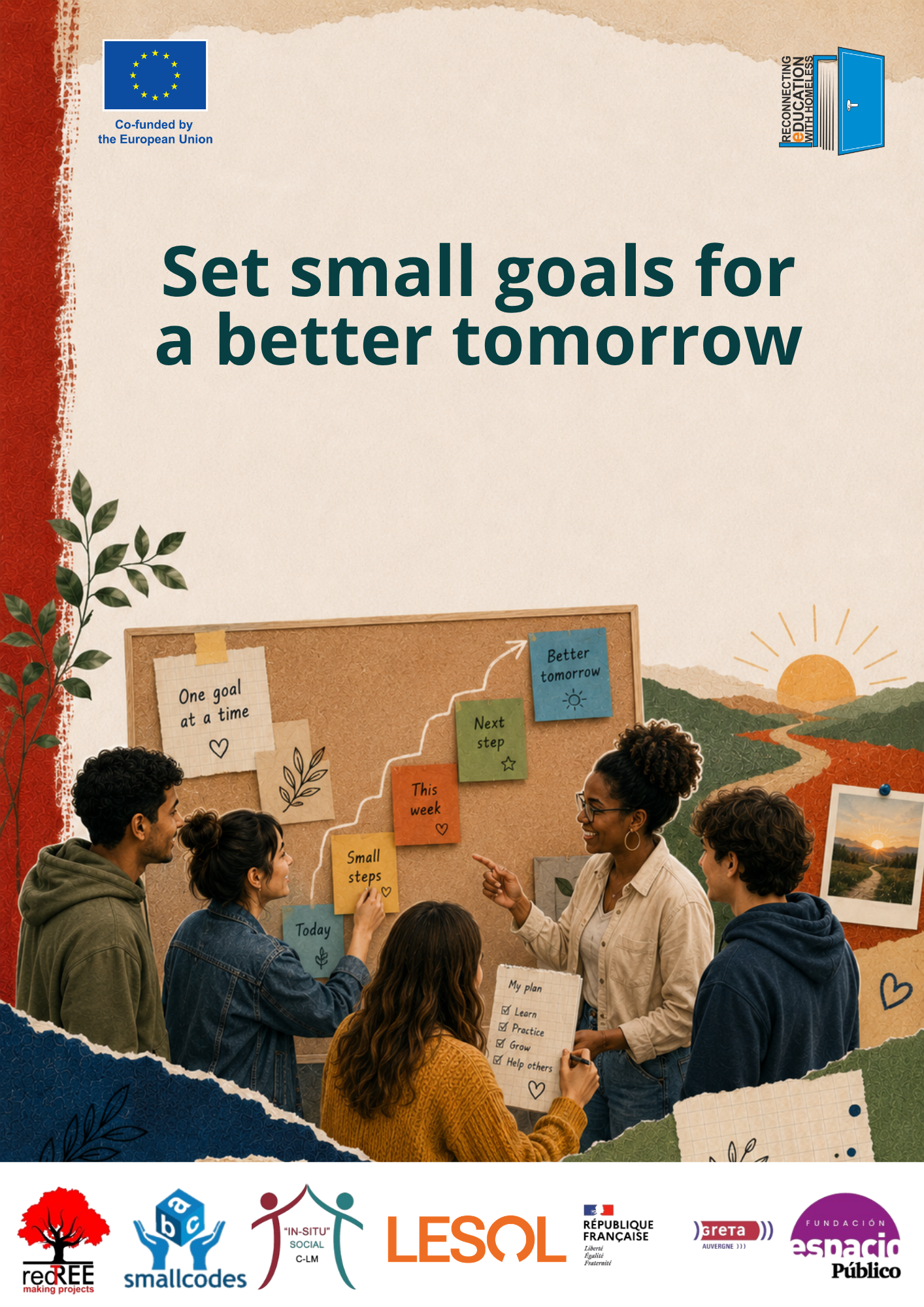
Resource 4. Setting small goals for a better tomorrow
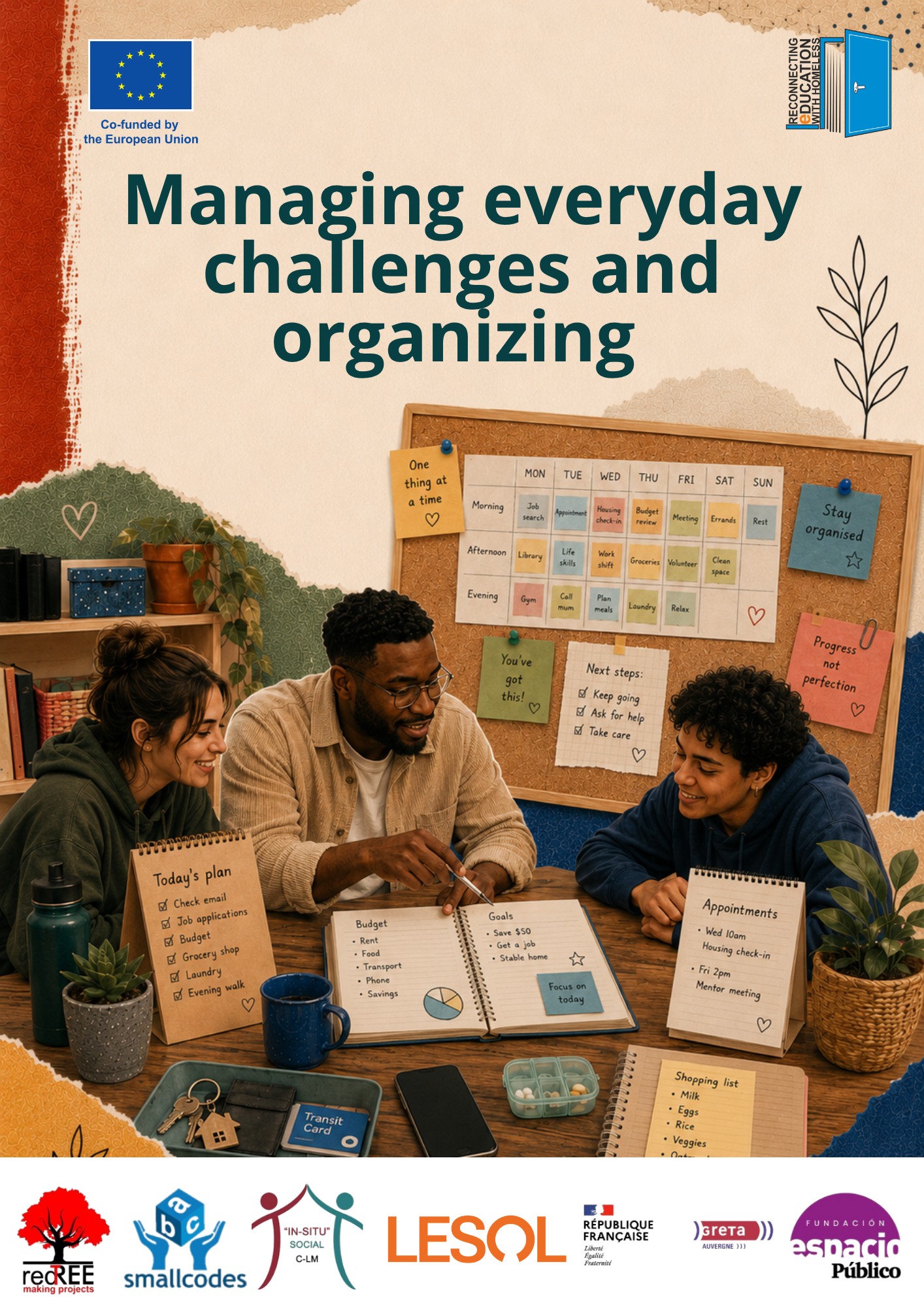
Resource 5. Managing everyday challenges and organization
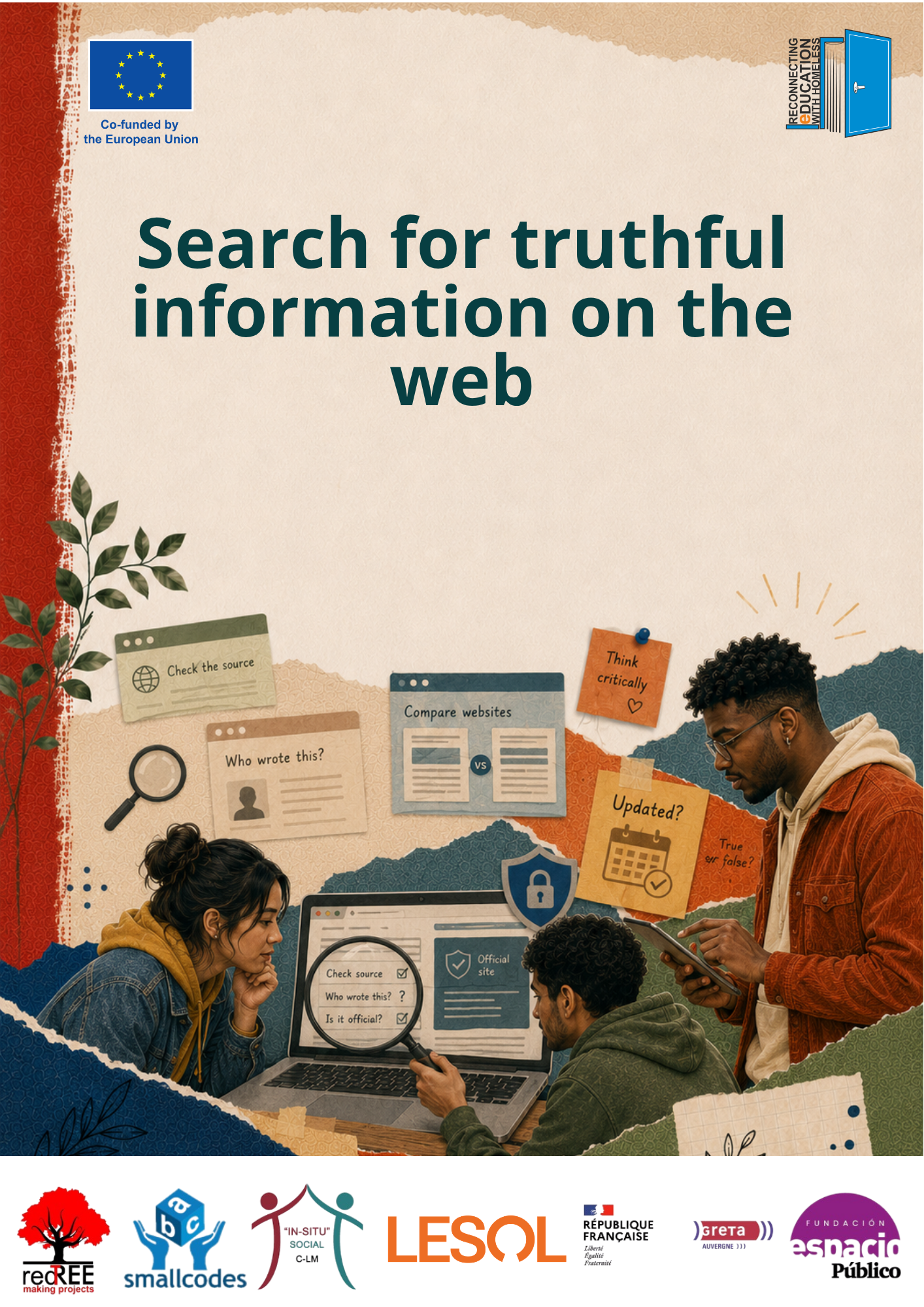
Resource 6. Searching for accurate information online
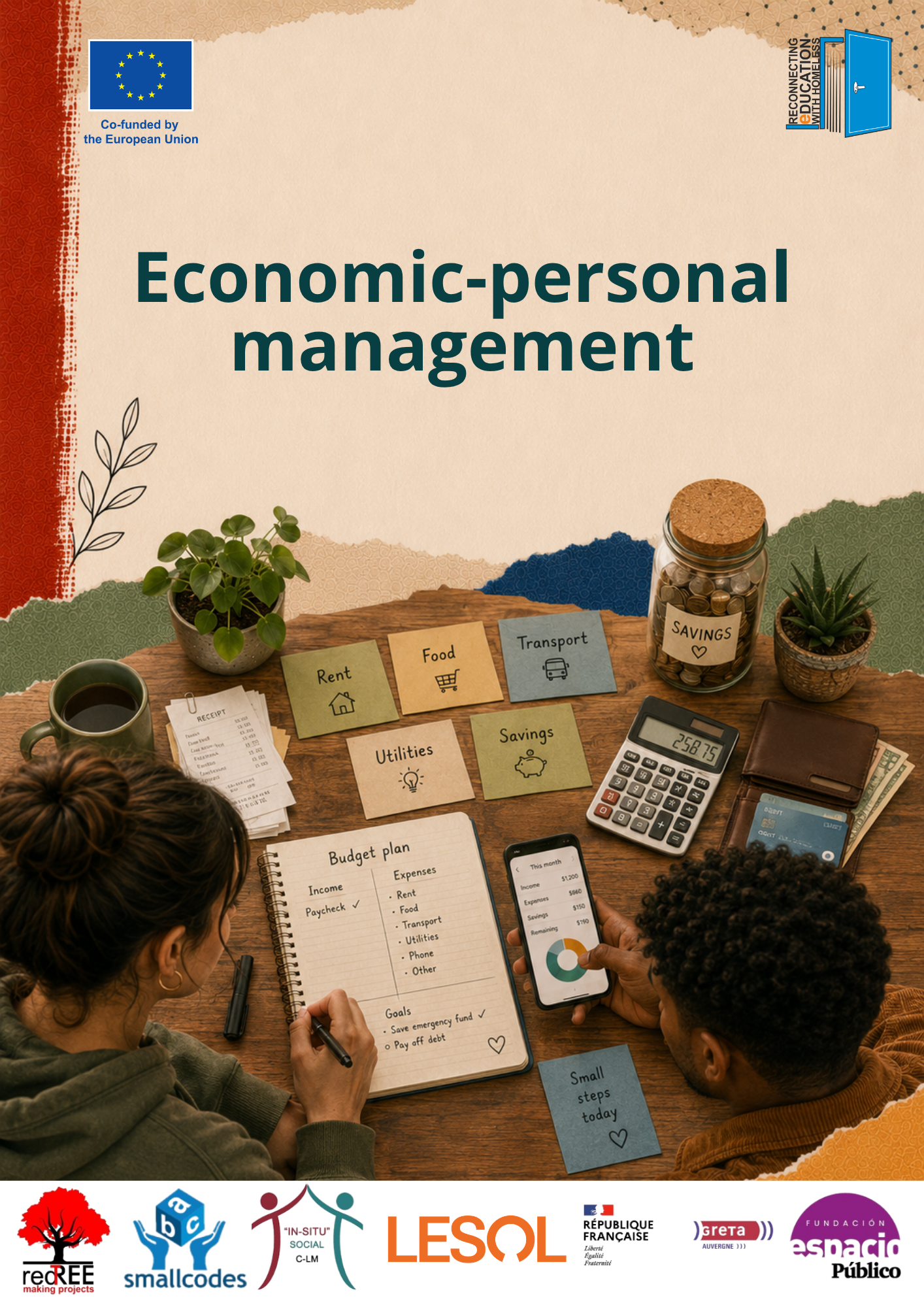
Resource 7. Personal financial management
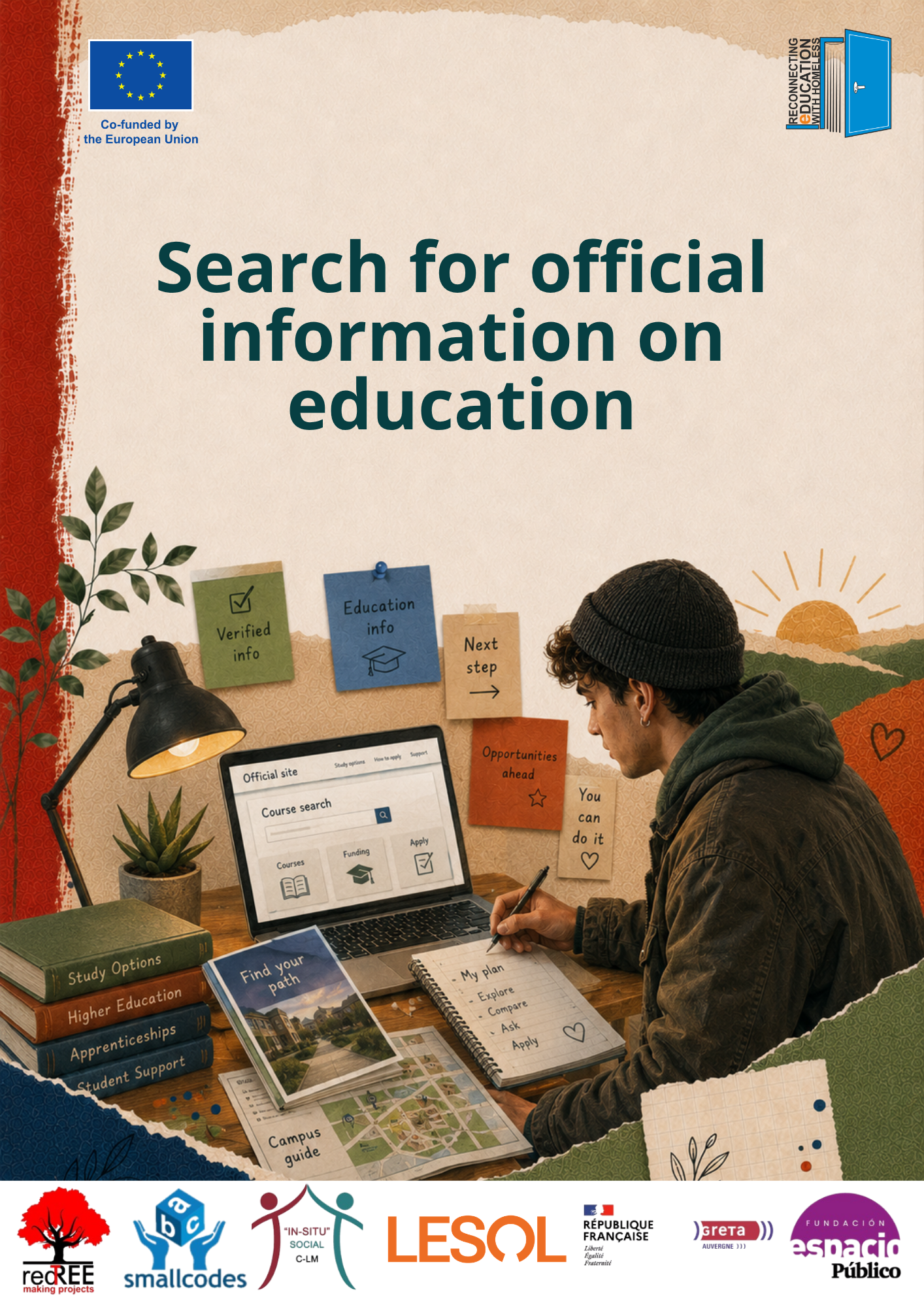
Resource 8. Searching for official information about education
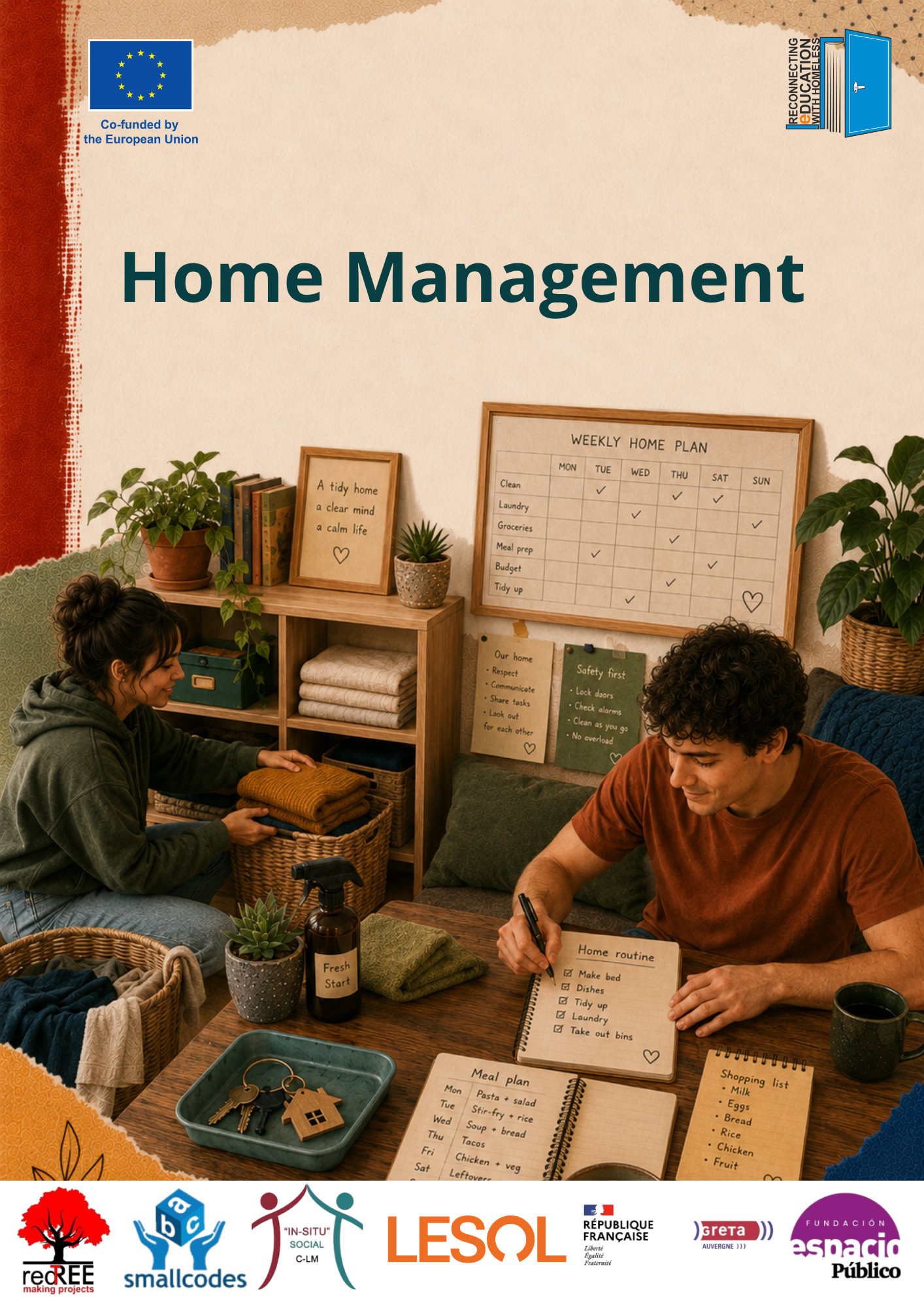
Resource 9. Household management
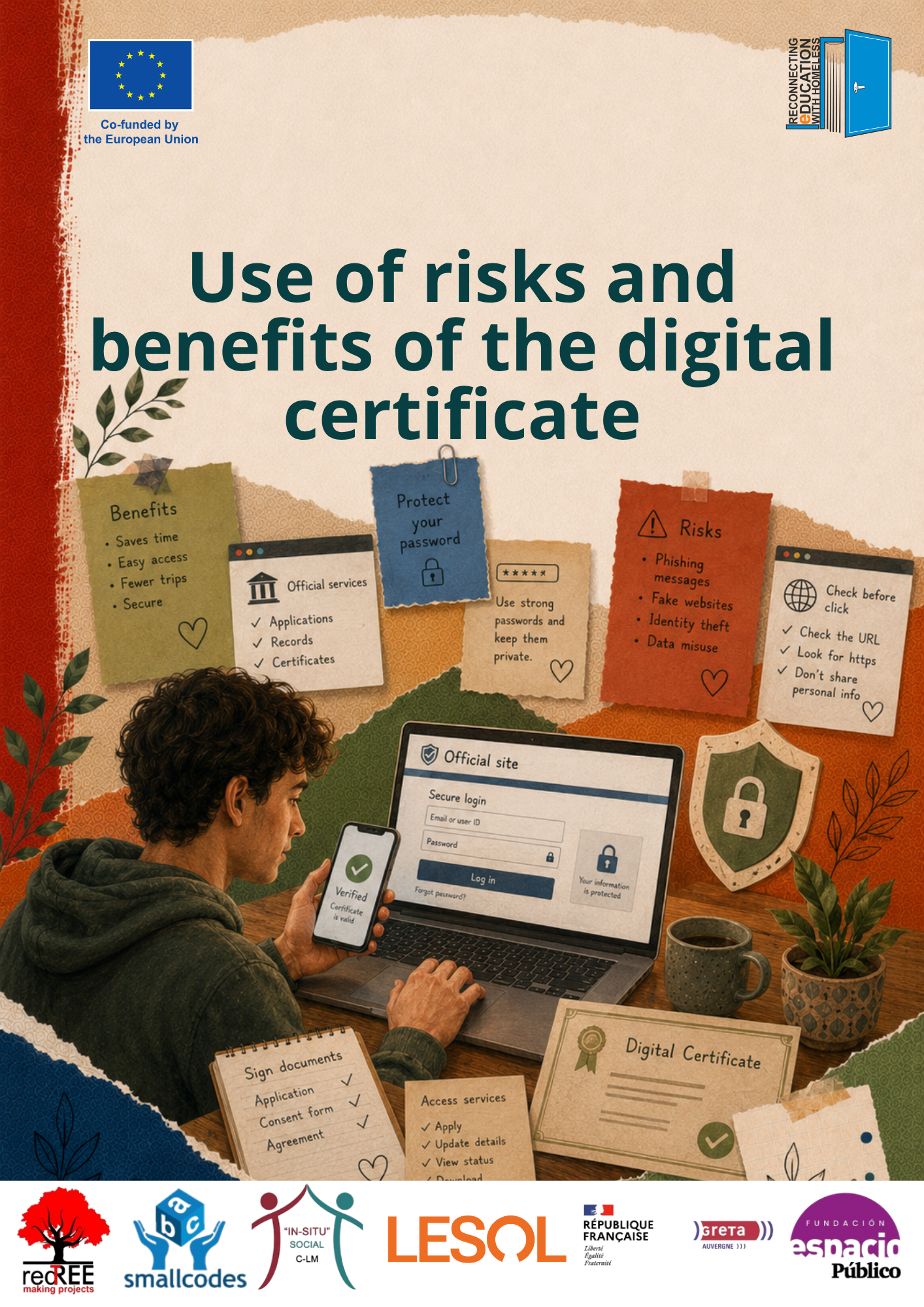
Resource 10. Using the risks and benefits of digital certificates

Phase 3
10 teaching units designed in line with the curriculum for Module 1 of Level I of Secondary Education for Adults (ESPA), but specifically adapted to the needs, interests, and specific situations of homeless adults. These units are based on practical, relatable, and useful learning situations that connect with the participants’ prior knowledge and everyday reality. This training process takes place exclusively within social organizations that work with homeless people. Its purpose is to create a realistic and accessible bridge between homelessness and access to formal education in Adult Education Centers (CEPA or equivalent in other countries).
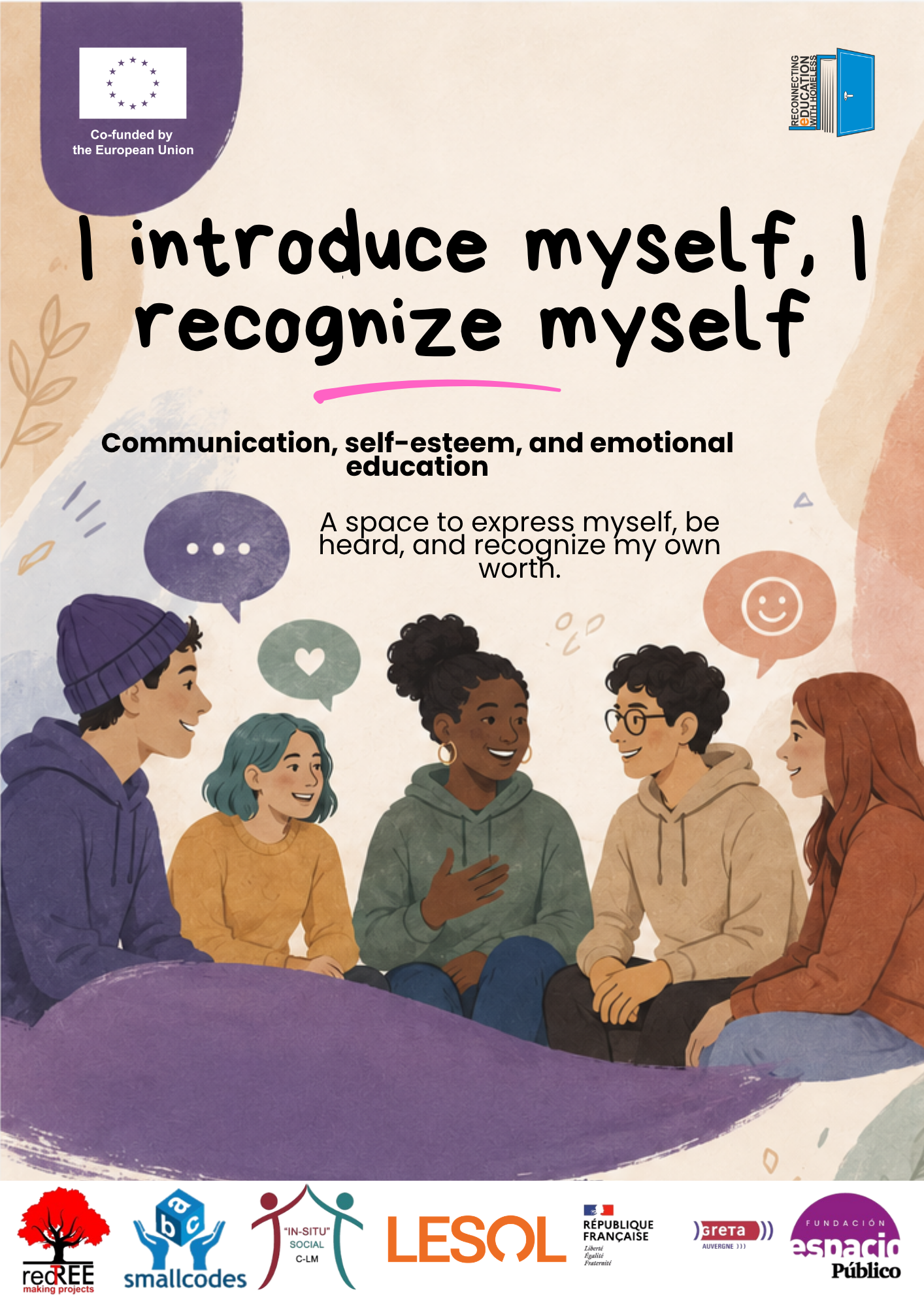
DU1. I INTRODUCE MYSELF, I RECOGNIZE MYSELF
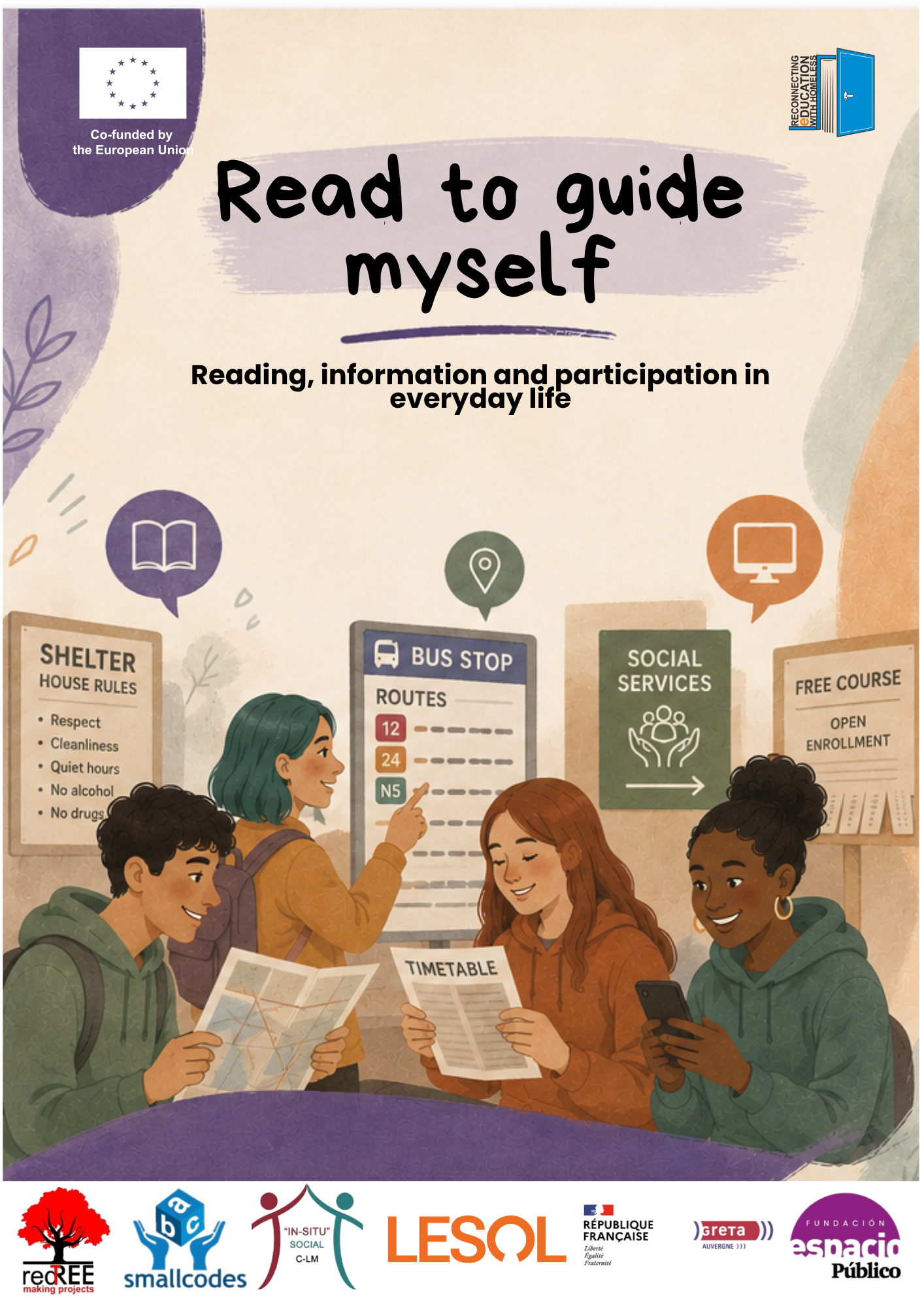
DU2. READ TO ORIENT MYSELF
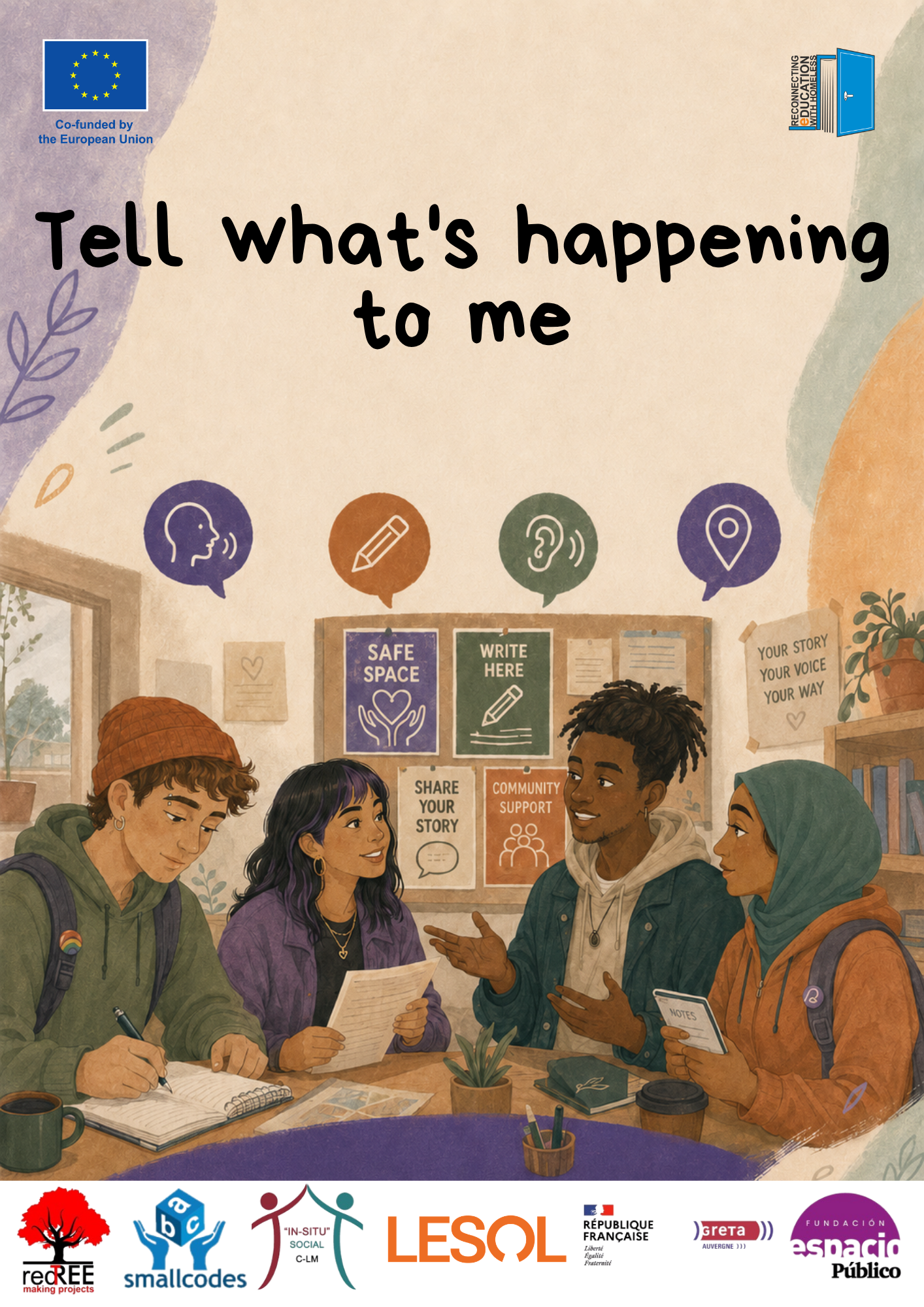
DU3. TELL ME WHAT’S HAPPENING TO ME
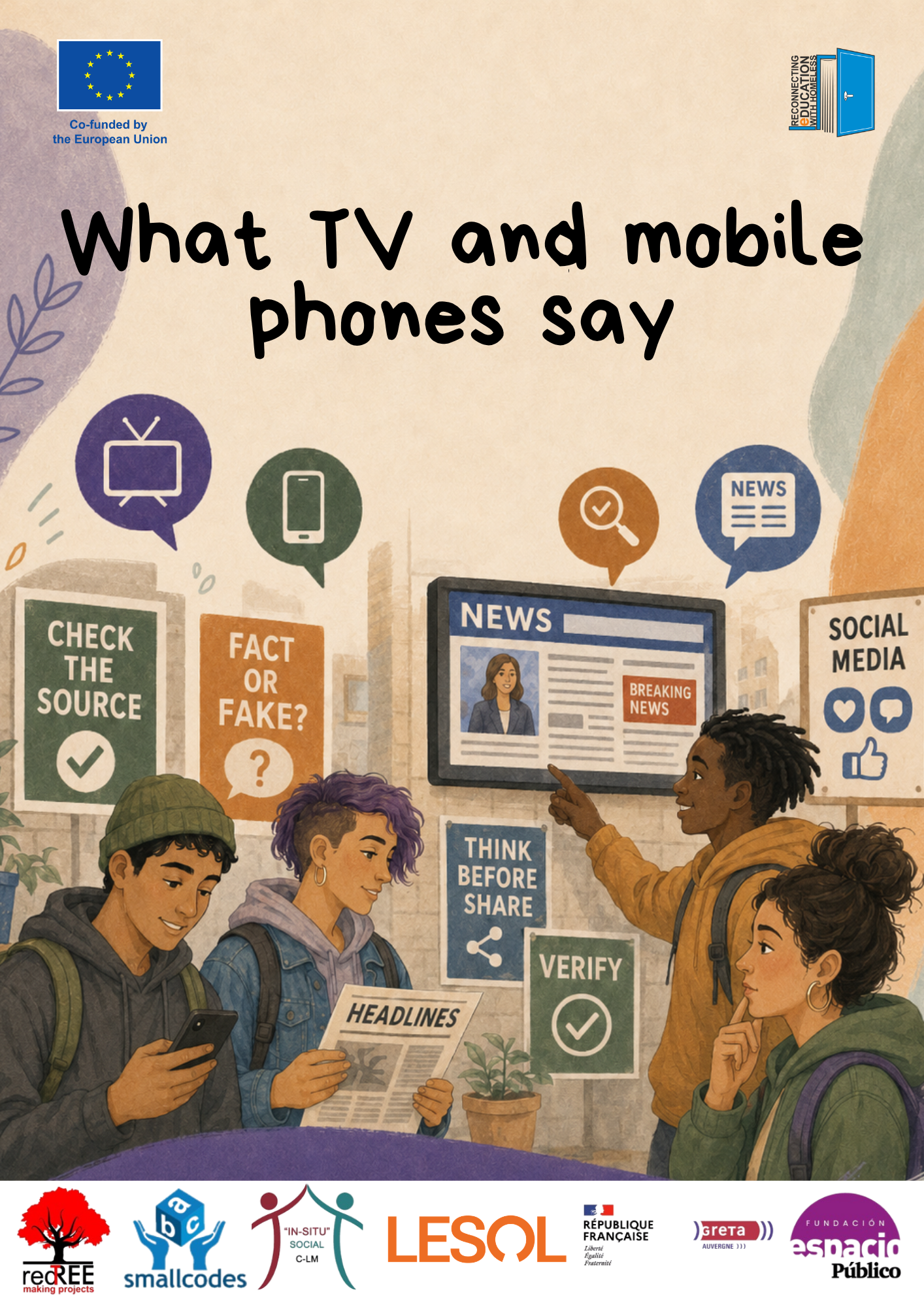
DU4. WHAT THE TV AND MY MOBILE SAY
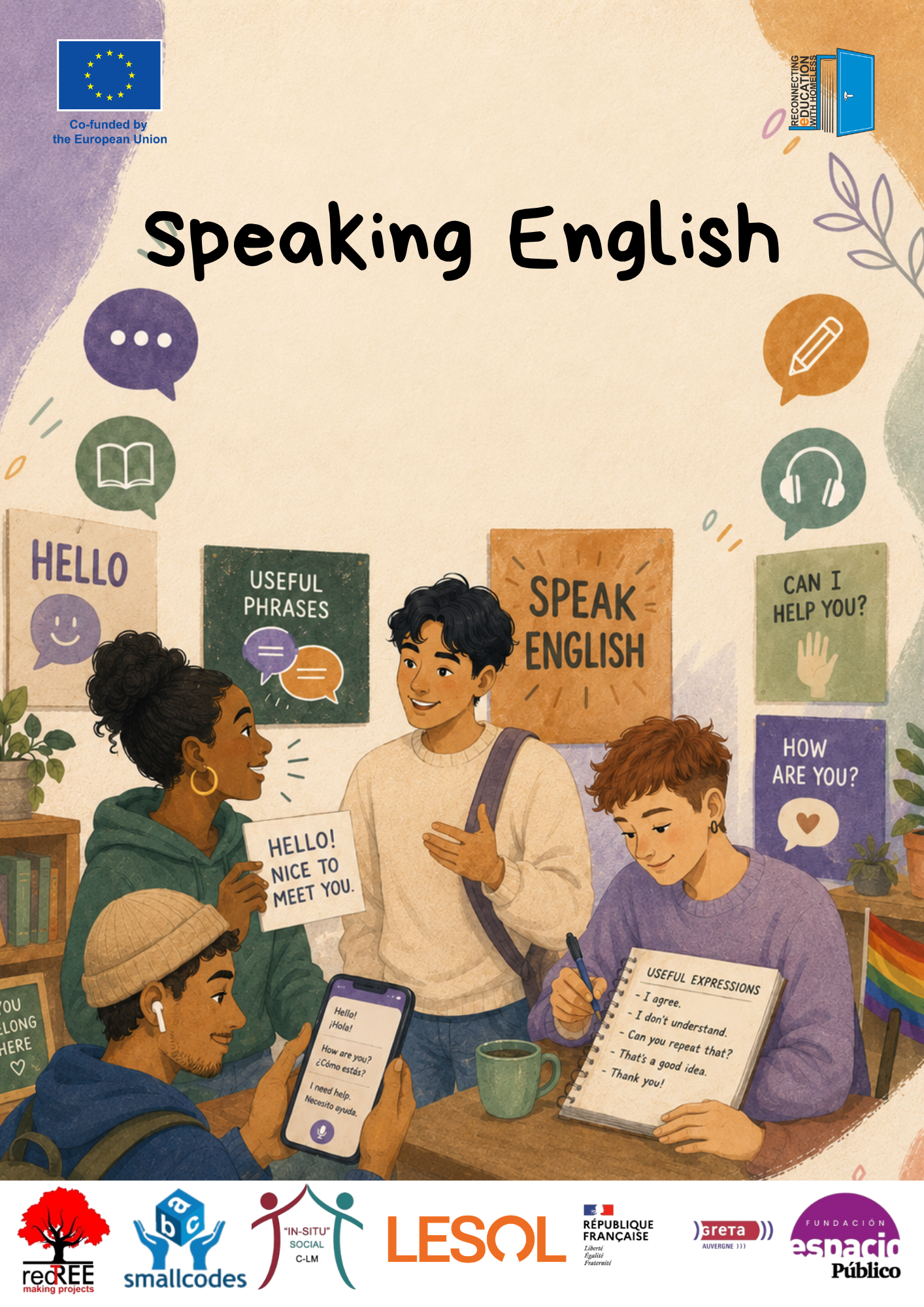
DU5. SPEAK IN ENGLISH
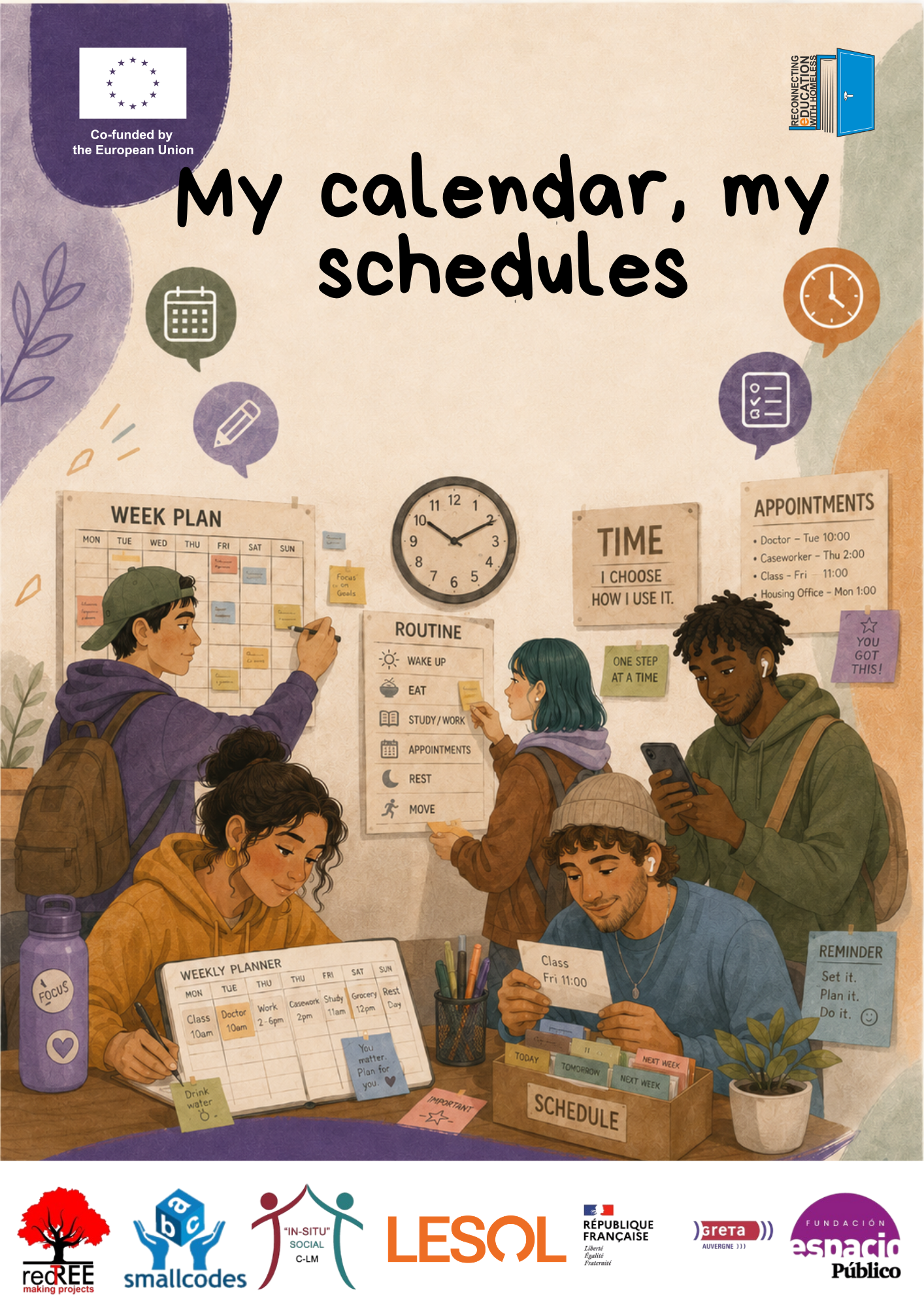
DU6. MY CALENDAR, MY SCHEDULES
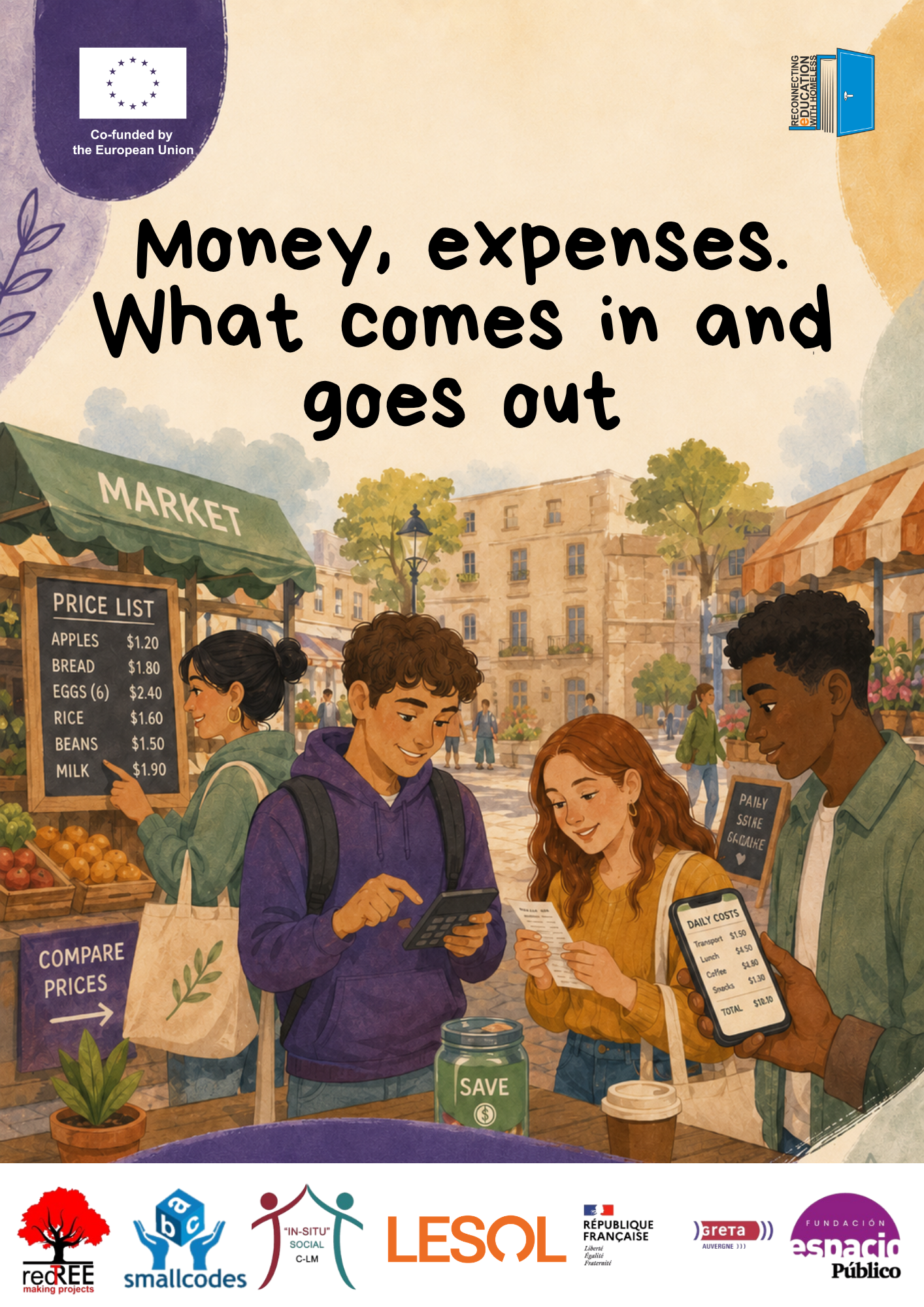
DU7. MONEY, EXPENSES, AND WHAT COMES IN AND OUT
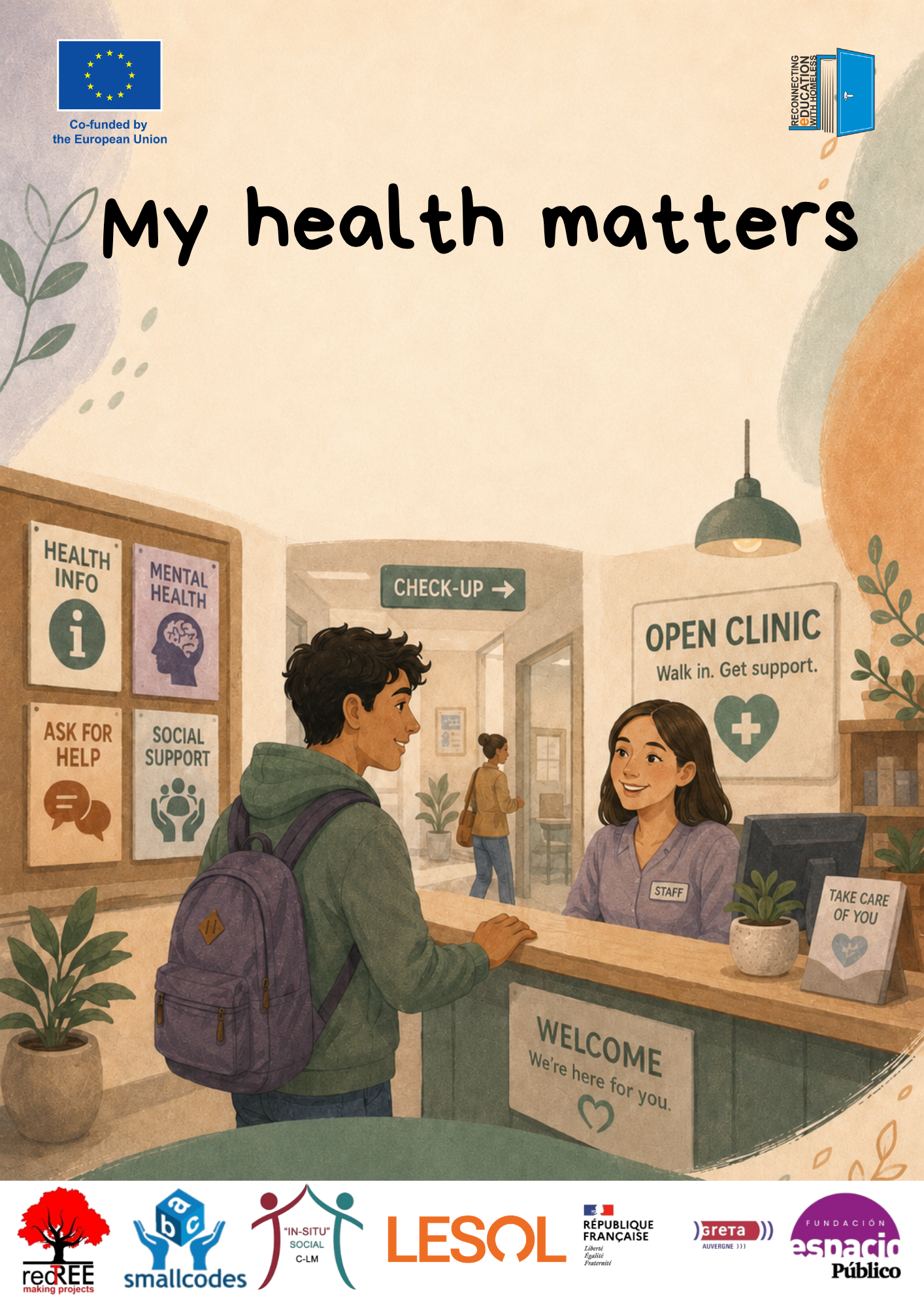
DU8. MY HEALTH MATTERS UD9. THE RIGHTS I HAVE UD10. LEARNING IS POSSIBLE
UD9. RIGHTS I HAVE
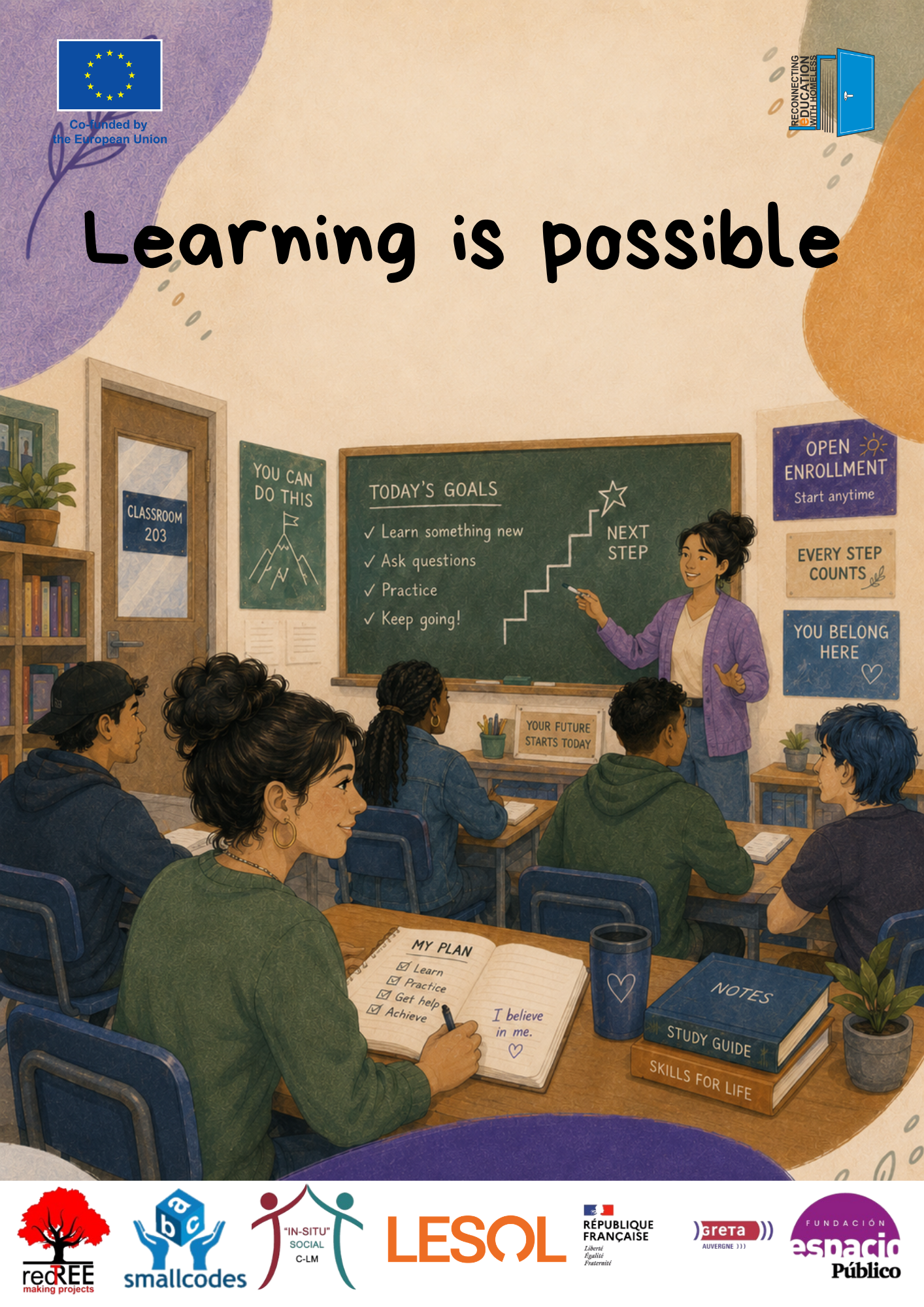
UD10. LEARNING IS POSSIBLE